

If you’ve lived anywhere along the Front Range for long, you already know that the wind here can be extreme. Boulder regularly records gusts over 100 miles per hour during extreme weather events, and summer thunderstorms produce microbursts capable of stripping shingles off entire neighborhoods in minutes. For homeowners tired of patching wind-damaged asphalt shingles every few years, metal roofing is often the alternative worth considering.
But how well does metal actually perform against the kind of wind events the Front Range produces? The short answer is very well, when it’s installed correctly. The longer answer involves understanding why, and where the limits really are.
The Wind Reality Along the Front Range
The Denver metro and the broader Front Range face a wider variety of wind events than most parts of the country. The main culprits:
Chinook and downslope windstorms. These are warm, dry winds that flow down off the Rockies, often in fall, winter, and early spring. They’re known for sustained speeds of 50 to 70 mph with gusts well over 100 mph. The infamous Boulder windstorms of 1982 and 2011 both produced gusts above 130 mph in some neighborhoods.
Summer thunderstorm downbursts and microbursts. Highly localized columns of fast-descending air that hit the ground and spread outward. Microbursts can produce winds equivalent to a tornado in a small area, often without warning.
Severe thunderstorm outflow. The leading edge of summer storms regularly produces sustained winds of 50 to 70 mph, sometimes accompanied by hail.
General terrain-driven gustiness. The complex topography along the foothills creates persistent wind acceleration zones that produce gusts well above the regional average year-round.
Conventional asphalt shingles are typically rated for wind resistance between 60 and 130 mph, depending on the product and installation. The problem is that the upper end of those ratings assumes perfect installation, undamaged sealant strips, and no prior wear. Real-world performance often falls short of the label, particularly on roofs that are more than 10 or 15 years old.
Why Metal Roofing Handles Wind Differently
Metal roofing systems are built around a fundamentally different design philosophy than shingle roofs, and that design is one of the main reasons they perform so well in wind events.
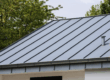
Continuous panels from eave to ridge. Standing-seam metal panels run as a single piece from the bottom of the roof to the top. There are no horizontal seams in the field of the panel, which means there are dramatically fewer points where wind can get under an edge and lift the material. A typical asphalt roof has thousands of individual shingles with thousands of potential wind-catch points. A standing-seam metal roof on the same house might have a few dozen panels.
Interlocking seam construction. The vertical seams on a standing-seam system are crimped or mechanically locked together, creating a continuous mechanical bond between panels. This is structurally different from the adhesive bond that holds asphalt shingles in place. Adhesive can break, lose elasticity, and weaken over time. A properly seamed metal connection doesn’t have the same failure mode.
Concealed fasteners. Most modern standing-seam systems use clips that fasten the panel to the deck through hidden anchors, not through the visible face of the panel. The fasteners aren’t exposed to weather and don’t loosen the way the surface nails on a shingle system can.
Favorable strength-to-weight ratio. Metal panels are strong enough to resist deformation under wind pressure without being so heavy they overload the underlying structure. The whole system is engineered to flex slightly under load and return to its original shape.
In practical terms, properly installed standing-seam metal roofing is typically rated for wind resistance of 110 to 140 mph or higher, with some specialized systems rated above that. Those ratings hold up reasonably well in real-world Front Range conditions, which is the more important measure.
Wind Ratings: What They Actually Mean
Wind resistance ratings on roofing products come from standardized tests performed in controlled conditions. Two ratings worth knowing:
ASTM E1592 evaluates how panel systems resist wind uplift, measuring the pressure at which the panel begins to fail. Most quality standing-seam systems test well above the design requirements for residential and commercial buildings in Colorado.
UL 580 rates the uplift resistance of the complete roofing assembly, including the panels, fasteners, and attachment to the deck. Higher classifications (Class 90 being the top common rating) indicate stronger performance.
A meaningful caveat: ratings test new product under specified conditions. Real-world performance also depends on installation quality, the condition of the deck and underlayment, and the wear the system has accumulated. A new high-rated system installed by an inexperienced crew can perform worse than a lower-rated system installed correctly.
Where Metal Roofing Still Has Vulnerabilities
No roofing system is invulnerable, and being honest about where metal can still fail is part of helping homeowners make a good decision.
Edge metal and trim. The drip edge, gable trim, and ridge cap on a metal roof are the most exposed components and the most common failure points in extreme wind. Quality systems use heavier-gauge edge metal and additional fastening at these points, but they still warrant inspection after major events.
Improperly installed seams. A standing-seam roof is only as strong as its seams. A crew without experience in mechanical seaming or hand-crimped connections can produce a roof that looks fine but doesn’t actually have the wind resistance the manufacturer specifies.
Penetrations and flashing. Pipe boots, HVAC penetrations, and the flashing around chimneys are vulnerable on any roofing system. On metal, these details require specific techniques to maintain wind and water resistance. Poor flashing detail is one of the leading causes of leaks on otherwise sound metal roofs.
Older exposed-fastener systems. Some lower-cost metal products use exposed screws through the face of the panel, with rubber washers that seal against the metal. These washers degrade over time and can become wind vulnerabilities on aging systems. Standing-seam systems with concealed fasteners don’t have this issue.
Cost, Lifespan, and the Real Comparison
A metal roof typically costs more upfront than a comparable asphalt installation. The trade-off shows up over time. A properly installed metal roof can last 50 years or more, while asphalt typically needs replacement every 15 to 25 years in Colorado conditions. Across multiple decades, metal often comes out comparable or favorable on total cost, especially when you factor in the storm damage repairs that asphalt roofs commonly need along the Front Range.
The decision usually comes down to how long you plan to stay in the home, the wind exposure on your specific property, and how much you value not having to think about the roof every storm season.
FAQ
How much wind can a metal roof actually handle?
A properly installed standing-seam metal roof is typically rated for 110 to 140 mph or higher, depending on the system. In real-world Front Range conditions, that means metal roofs routinely come through Chinook windstorms and severe thunderstorms with no damage at all, where neighboring asphalt roofs lose shingles.
Does a metal roof get loud during windstorms?
Less than most people expect. Modern metal roofing systems are installed over solid decking with underlayment, which dampens sound significantly. Wind noise on a properly installed metal roof is comparable to an asphalt roof, not the drum-like effect people sometimes associate with metal.
Will hail dent my metal roof during a Colorado storm?
Yes, larger hail can dent metal panels, though it rarely causes functional damage. The roof typically remains watertight after a hail event. Cosmetic denting is the trade-off, and stone-coated steel products hide impact damage better than smooth standing-seam systems if appearance after storms matters to you.
Is metal roofing worth it for a home that’s only seen moderate wind damage in the past?
That depends on how long you plan to stay and how risk-averse you are. Even moderate Front Range exposure produces wear that adds up across multiple storm seasons. For homeowners planning to stay 15-plus years, the longevity and lower maintenance of metal often justifies the upfront cost.
Can metal roofing be installed over an existing asphalt roof?
It can in some cases, but it isn’t recommended in most situations. Installing over existing shingles can trap moisture, complicate ventilation, and reduce the longevity and wind performance of the new system. A full tear-off lets the installer inspect the decking and address any underlying issues before the new roof goes on.
Does insurance treat metal roofs differently than asphalt?
Many Colorado insurers offer premium discounts or favorable claim treatment for metal roofs because of their durability and reduced claim frequency. The specifics vary by carrier, and it’s worth a call to your agent to confirm what’s available for your specific policy.
Request a Metal Roofing Consultation with Pinnacle Roofing Associates
If you’re considering metal roofing for your home or commercial building in Aurora, Centennial, or the greater Denver metro, the right starting point is a conversation about what fits your property, your wind exposure, and your budget. Pinnacle Roofing Associates has years of experience installing metal roofing systems built to handle Front Range conditions.
Call (303) 589-0708 or visit pinnacleroofingassociates.com to schedule a free consultation. We’ll walk through the system options, discuss the real trade-offs against your current roof, and give you a clear written estimate with no obligation.